
A Grey Archipelago
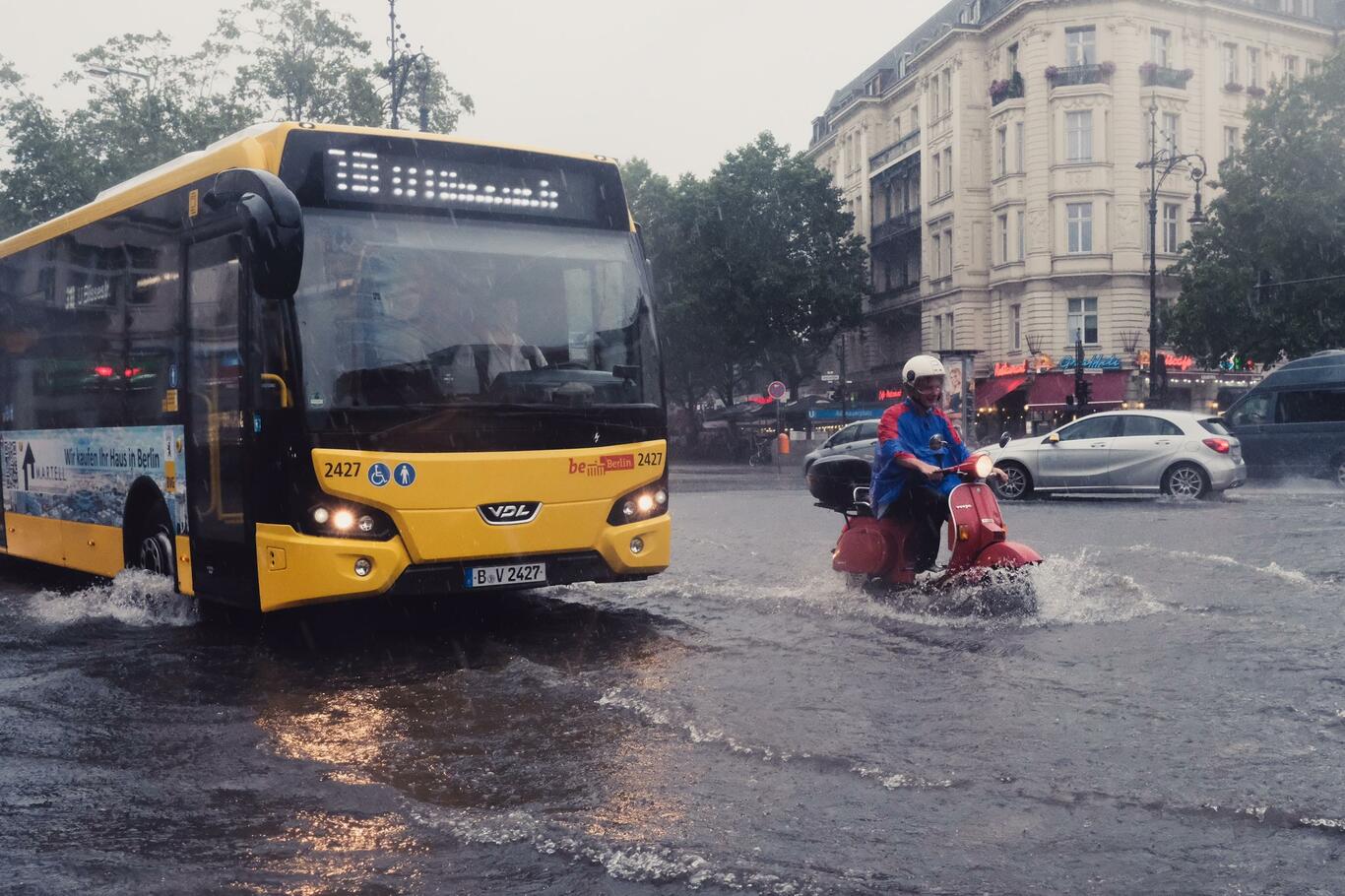
Flood
Berlin's landscape was shaped by glaciers between 24.000 and 17.000 years ago. Meltwater flowing westwards, parallelly to the glaciers' edge, dug out the Warschau-Berliner Urstromtal, depositing sands particularly permeable to water.
The resulting wetlands were drained during urbanization, a process to which some streets (Kurfürstendamm, Kaiserdamm) own their names. Today, the city's watery past hides within pink pipes. It also resurfaces every summer, when heavy rains raise the groundwater above the street surface, flooding the low-lying parts of the city.
This project starts by imagining an endless summer rain that renders this situation permanent, turning Berlin back into a swamp.
The first consequences are clear. Public transportation fails quickly, the power grid soon follows. Fuel becomes scarce, paralyzing supply chains. After a few weeks, the government flees southwards to safety, joined by those who can afford it. At the same time, refugees from worse affected areas converge towards Berlin.
The long-term outcome, however, is harder to imagine from today's perspective. How to conceive of a future for the city within these new rules? How can these new rules even be described?